
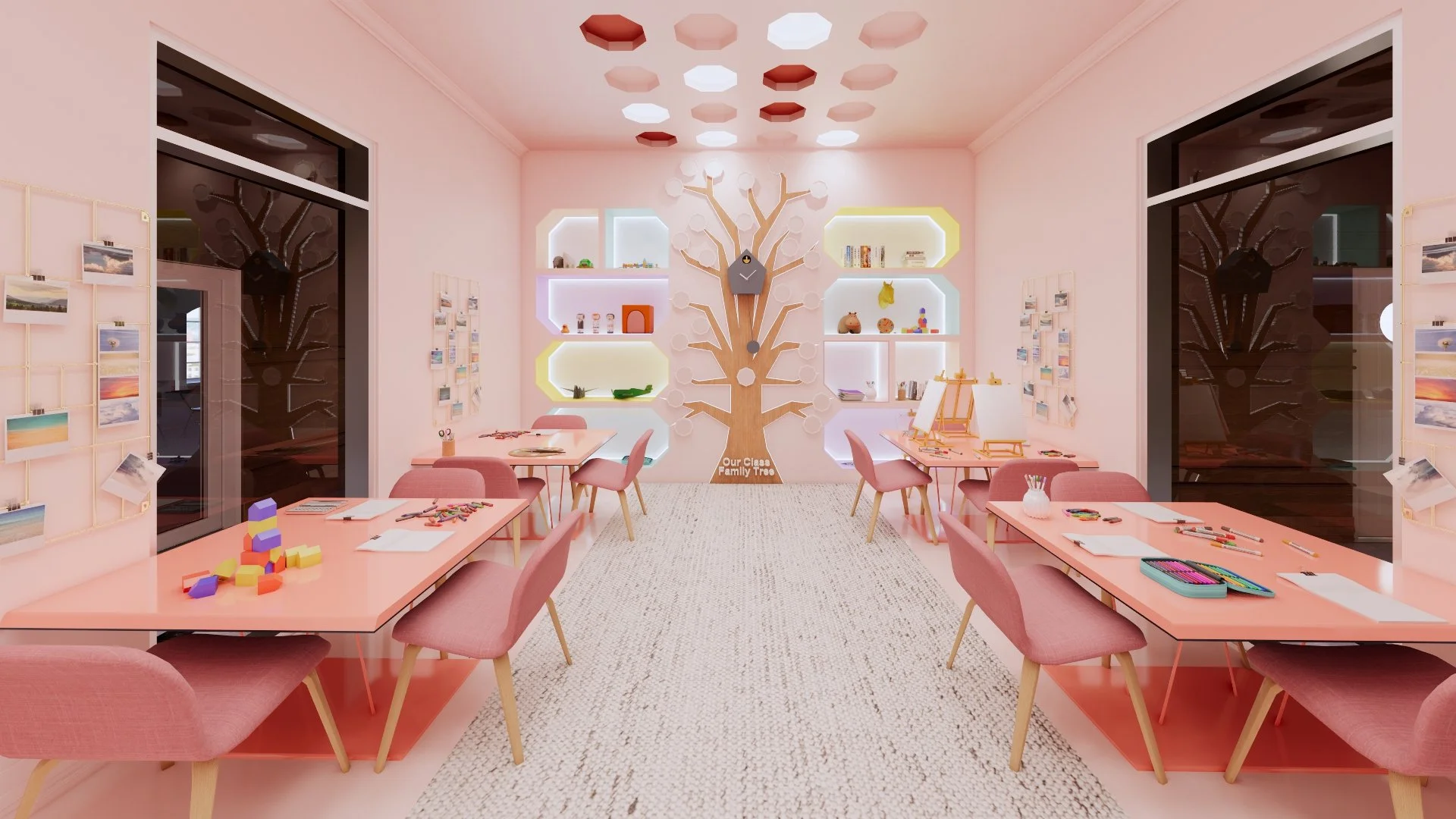
Designing for Calm: Interior Design Strategies for Supportive Educational and Community Spaces for Children and Teens in Foster Care
Children and teens in foster care often experience trauma, emotional stress, and instability due to disrupted family relationships and repeated transitions between living environments. These experiences can affect emotional development, behavior, learning, and their sense of safety and belonging. While educational and community day centers provide important support services, many are not intentionally designed to address the psychological and sensory effects of trauma. This thesis explores how trauma-informed interior design can create calming, supportive, and emotionally responsive environments for children and teens in foster care. With a focus on color psychology and sensory design, the research examines how interior environments can help reduce stress, support emotional regulation, and promote comfort, stability, and well-being. Through literature review, precedent analysis, and evidence-based design research, this study proposes interior design strategies for trauma-informed day centers that enhance well-being through carefully considered color palettes, sensory balance, and supportive spatial experiences.
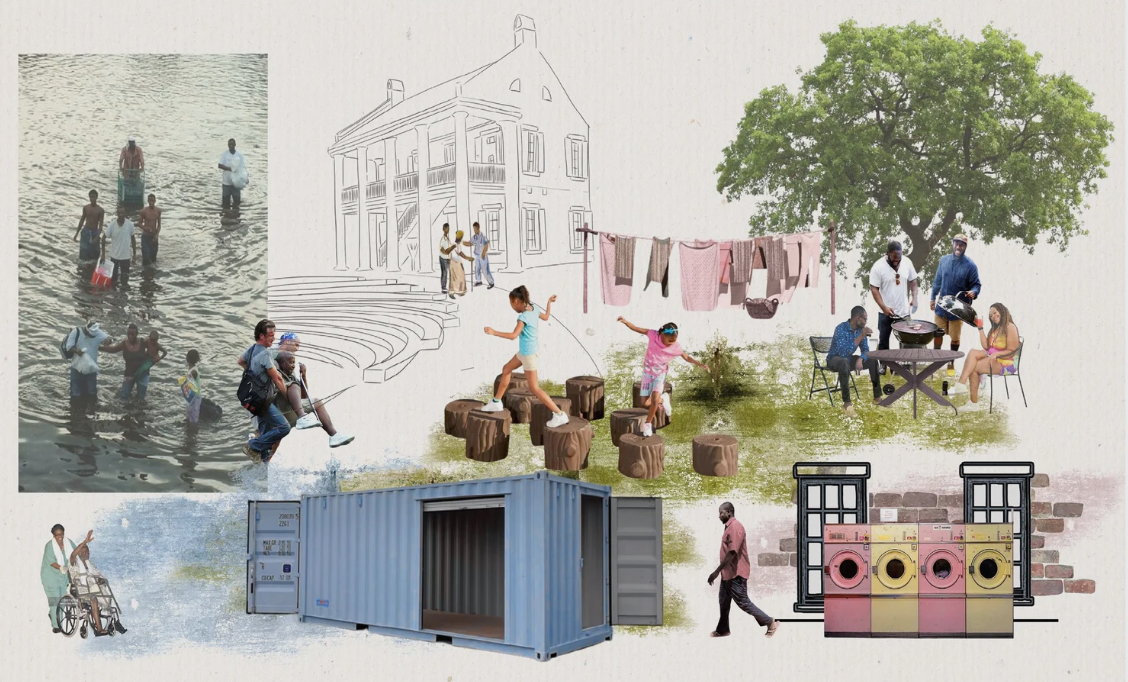
Designing with Dignity: Community-Focused Solutions for Climate Displacement
Hurricane Katrina revealed how exposed New Orleans is to disasters and made it clear that climate events often affect marginalized neighborhoods like the Lower Ninth Ward the most. As storms become more intense and sea levels continue to rise, it is crucial to build stronger, more resilient communities. This project plans to open a center at Jackson Barracks that will offer resources, improve food access, provide education, create gathering spaces, and give ongoing support. By encouraging self-sufficiency and careful planning, the project aims to help the Lower Ninth Ward community prepare for future climate challenges and preserve its identity.

Accompaniment: Co-living with Nature
Accompaniment is a way of being with people and nature that fosters joy and interdependence. It is a reminder that people and nature are not separated, and people are part of nature, where people and nature continuously interact and promote one another. My thesis focuses on the ways to achieve this concept in a built environment by addressing nature as a member of our community. In this community, cultural diversity and biodiversity is valued and associated with the place’s distinctive identity. What makes this Nature-Human Community Center special is the unique integration of culture with nature. The space encourages nurturing the symbiotic relationship between humans and nature through continuous exposure to self-education and activities involving art and nature in the ecological and sensory rich environment. This is to promote a close human-nature connection for a better understanding of sustainable culture and community. This holistic design focuses on the community space enriching the interdependent relationship between humanity and nature.

Green Furniture: Implementing and Teaching of the Usage of Biodegradable Materials in Furniture Design
This project utilizes biodegradable and recycled materials in furniture design to reduce carbon footprints, while also addressing travel distances, manufacturing processes, and the forms of energy used for manufacturing. Additionally, information about the furniture elements and production processes will be made available in courses for the public, raising awareness for sustainable practices within furniture design.

Combating Racism in the Built Environment
Due to unjust practices in the architecture and interior design fields, the built environment lacks equality. In particular, racist practices such as redlining and Jim Crow laws have shaped the built environment to systematically dictate who belongs where. This thesis uses inclusionary methods and community-based design to create a school for underprivileged youth, and make a healthier built environment for everyone.
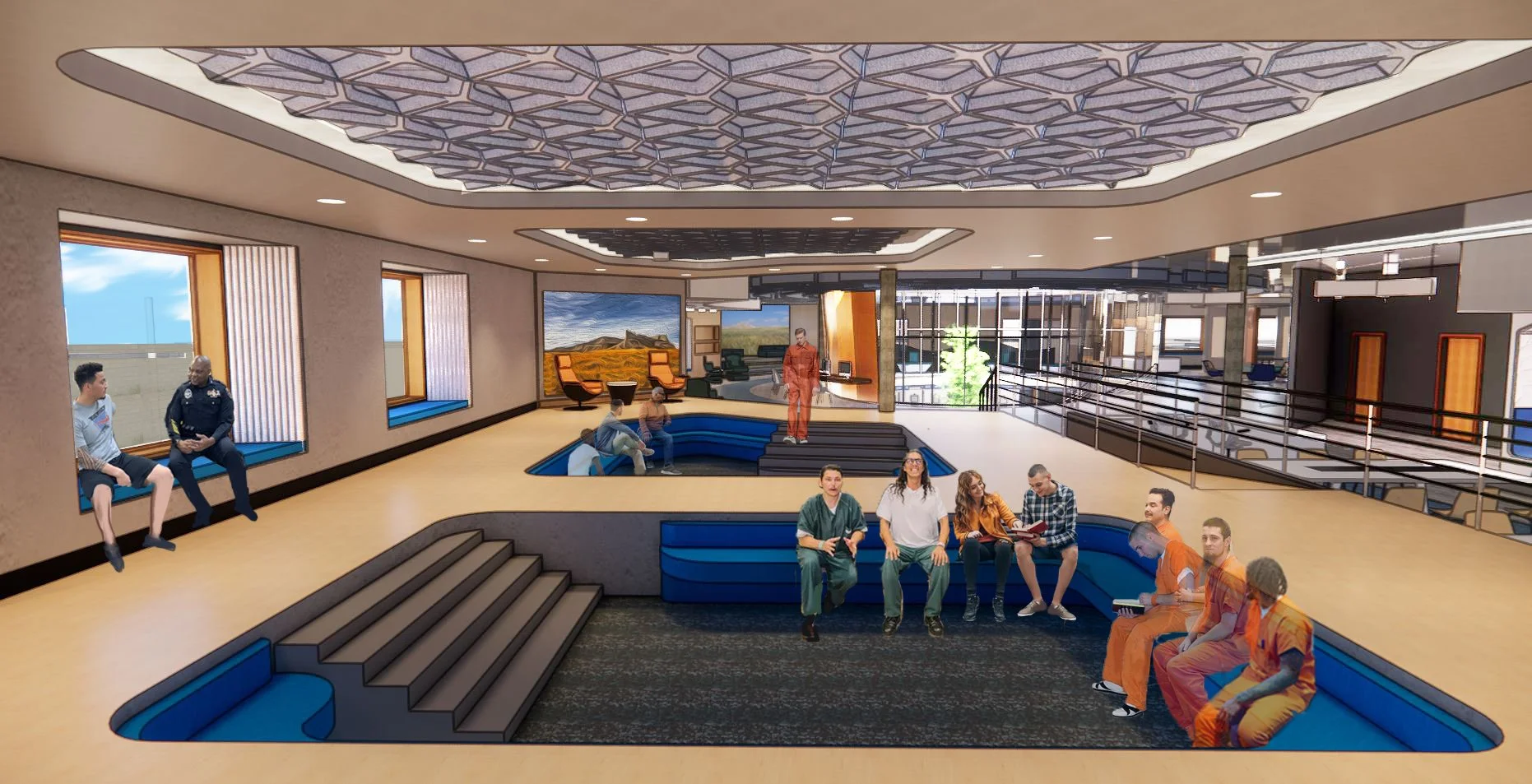
Students Sentenced: Architecture and Design for Imprisoned Rights
The US correctional system is the largest and most pervasive social control system in the world; its cyclical nature displaces millions of lives each year. This thesis project confronts mass incarceration in America by using architecture and design to improve the incarcerated experience. These designs promote a more rehabilitative environment and enable human connections using architectural fluidity, spatial flexibility, natural light, and material texture to provide relief from inmates’ relentless world of confinement and cultivate an environment that instills hope for a productive life after prison.

Using Immersive Nature Experiences to Enhance Wellbeing and Promote Conservation of our Natural Environments
By creating immersive nature experiences and exploring aesthetics, sustainability, wellbeing and craftsmanship my thesis aims to develop a seamless, interactive experience between people and nature in order to enhance wellbeing and promote conservation of our national environments.

Igniting a Legacy: Adaptive Reuse of Cultural and Historically Significant Buildings on HBCU Campuses
Cultural and Historically significant sites not only allow for the preservation of history, but a connection of experiences for past and future generations. These historical sites are crucial to the makeup and individuality of each campus as they merge existing conditions with modern elements. Given the historical significance of HBCU campuses, it is important to remember their legacies, yet design them to be efficient for the present needs of the 21st century student. With the practice of Adaptive Reuse, designers will be able to preserve the legacies of these historical buildings yet allow for modern design advancements and renewed use within the interior.

Perfectly Imperfect: Resurrecting a Legacy of Purpose Through Materials, Forms, and Space
Century-old buildings leave us to retell their stories through their materials, forms, and spaces. I created the phrase “perfectly imperfect” as a way of finding beauty when two materials and/or forms blend with existing materials to form a singular artifact that is perfectly imperfect. Using an estate of grand size and beauty, historic as it is, deserves a mission and purpose grander than its original one-family function. A “legacy of purpose” will be resurrected with this historic estate, honoring Helen Gould’s mission and values in how the estate should be repurposed, as a fashion and textile trade school for high school graduates. If she were alive today, she would want the estate to contribute to the greater New York City’s underserved youth in this way. Three beautiful buildings on this historic site will be greatly enhanced by these renovations and this relevant, contemporary mission.

Restore: A Proactive Approach to Youth Reentry
Previously incarcerated youth suffer from a lack of re-entry services available to them. My thesis proposes a space in which a variety of services are offered to youth who have recently been released from the justice system. These services will focus on rehabilitation, transitioning back into normal life and reducing the chance of re-offending, while fostering a sense of community.

Connections Community High School: Socially and Environmentally Sustainable Design for Urban Communities
It all begins with an idea.

Released: Designing for a Stigmatized, At-Risk & Transitional Population
It all begins with an idea.


Revitalizing Rural: Using Place-Based Education Design to Revitalize Rural America
It all begins with an idea.

Urban Wilderness School: Supporting ecological connection, respect, and behaviors
Exploring ways to blur the division between interior and exterior spaces, promoting a sense of curiosity towards the natural world.

CAPAS: The Creative and Performing Arts School for the d/Deaf
This thesis project explores how traditional rectilinear buildings can be modified and designed to support d/Deaf students.